
Real estate has always reflected the way cities change.
As economies grow, infrastructure expands and lifestyles evolve, the places people choose to live and work begin to change with them. Today, that transformation is happening at a faster pace, influenced by technology, shifting demographics, changing work patterns and a growing appreciation for quality of life.
The next chapter of real estate may therefore look less like a race to build more and more like a shift towards building better.
From Location to Connected Location
Location has always been one of the fundamental principles of real estate. But what makes a location valuable is becoming more layered.
Connectivity is no longer limited to proximity to a city centre. Access to employment hubs, transport networks, social infrastructure, retail, education, healthcare and leisure increasingly shapes how people evaluate a neighbourhood.
As cities expand outward, emerging districts are becoming complete ecosystems rather than simply extensions of established ones.
The Rise of Experience
Real estate is moving beyond the idea of a physical address.
People increasingly evaluate places through the experience they offer. How does the neighbourhood feel? Is there access to nature? Are everyday conveniences nearby? Does the development create opportunities for community while still allowing privacy?
This shift is changing the way residential, commercial and mixed-use developments are conceived.
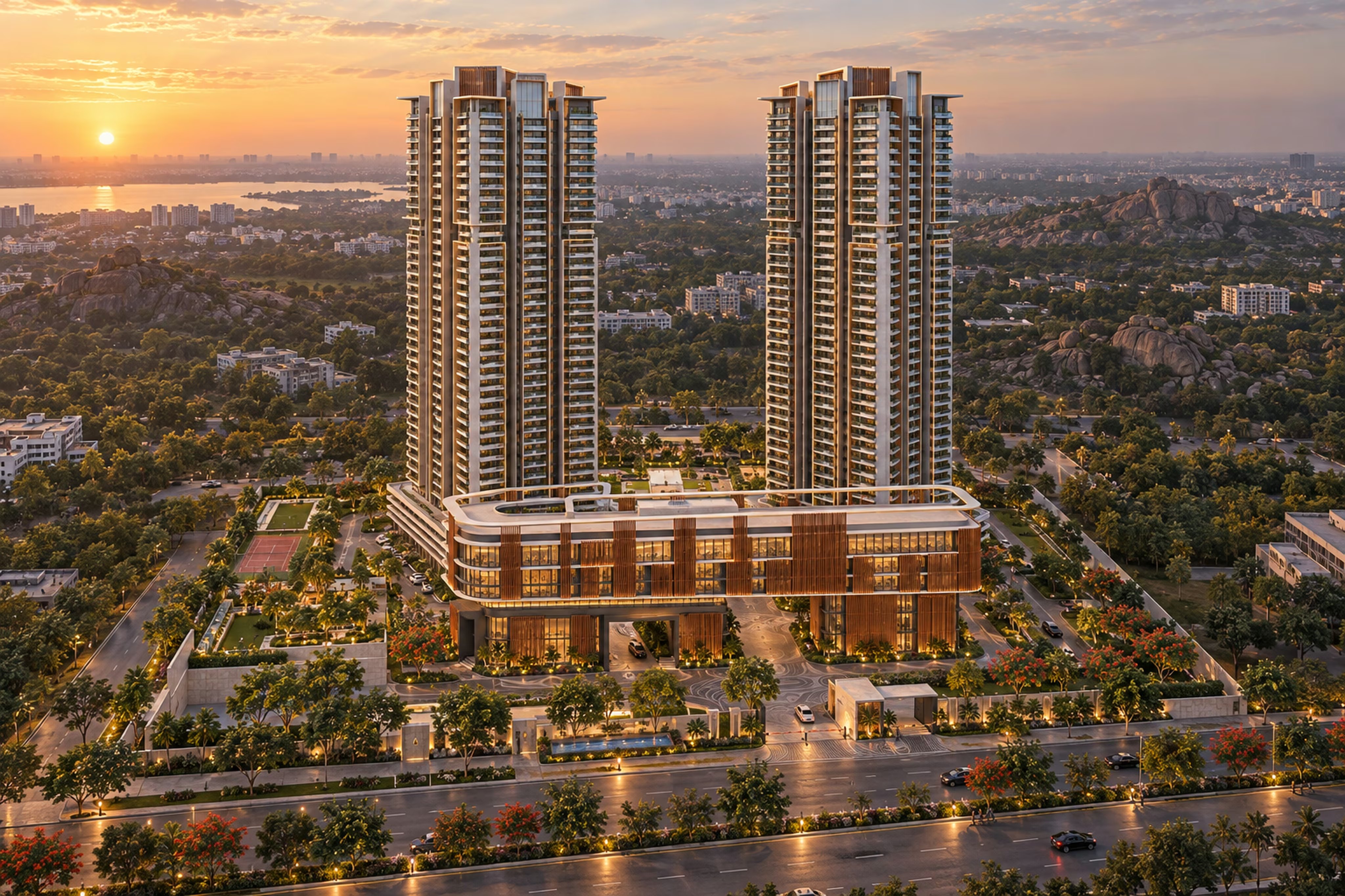
Buildings are becoming part of a larger experience rather than isolated objects within a city.
Flexibility Will Matter More
The future will also demand greater flexibility.
Work patterns have changed, businesses are becoming more adaptable and households are increasingly diverse. Spaces need to respond to these changes rather than remain fixed around one definition of use.
For homes, this could mean adaptable rooms and multifunctional spaces. For workplaces, it could mean environments that support collaboration, concentration and social interaction. For commercial developments, it could mean spaces that can evolve alongside the businesses occupying them.
The most resilient spaces may be those designed with change in mind.
Technology Becomes Less Visible
Technology will continue to influence real estate, but perhaps not always in obvious ways.
Smart infrastructure, energy management, security systems, mobility solutions and data-led planning are increasingly becoming part of the background of everyday life.
The objective is not necessarily to make technology visible. It is to make buildings work better.
Sustainability Moves From Feature to Foundation
Sustainability is also becoming less of an additional consideration and more of a fundamental part of development.
Energy efficiency, water management, responsible materials, landscape planning and long-term environmental performance are increasingly shaping how projects are conceived from the beginning.
The future of real estate will be measured not only by what is built, but by how responsibly it performs over time.
Cities Designed Around Life
Perhaps the most significant shift is towards human experience.
The next generation of real estate will have to consider not just buildings, but the lives that unfold within them. Homes will need to support changing lifestyles. Workplaces will need to offer more than desks. Retail environments will need to create experiences beyond transactions. Neighbourhoods will need to bring together convenience, community and character.
Real estate has always been about creating places.
The opportunity now is to create places that remain relevant as life around them changes.
The future may belong to developments that understand this distinction: not simply spaces that occupy a city, but places that contribute to how the city lives.